MAY 12, 2026 / WHITE PAPER
The LabelInn Edge Server Sub-100 ms LAN Printing for Offline-First Factories
A white paper on the LabelInn Edge Server — sub-100 ms LAN printing, append-only offline outbox, peer-to-peer mesh discovery, and three protocols (REST, gRPC, MQTT) on one node. The architecture for factories that cannot wait for the cloud.

THE PROBLEM
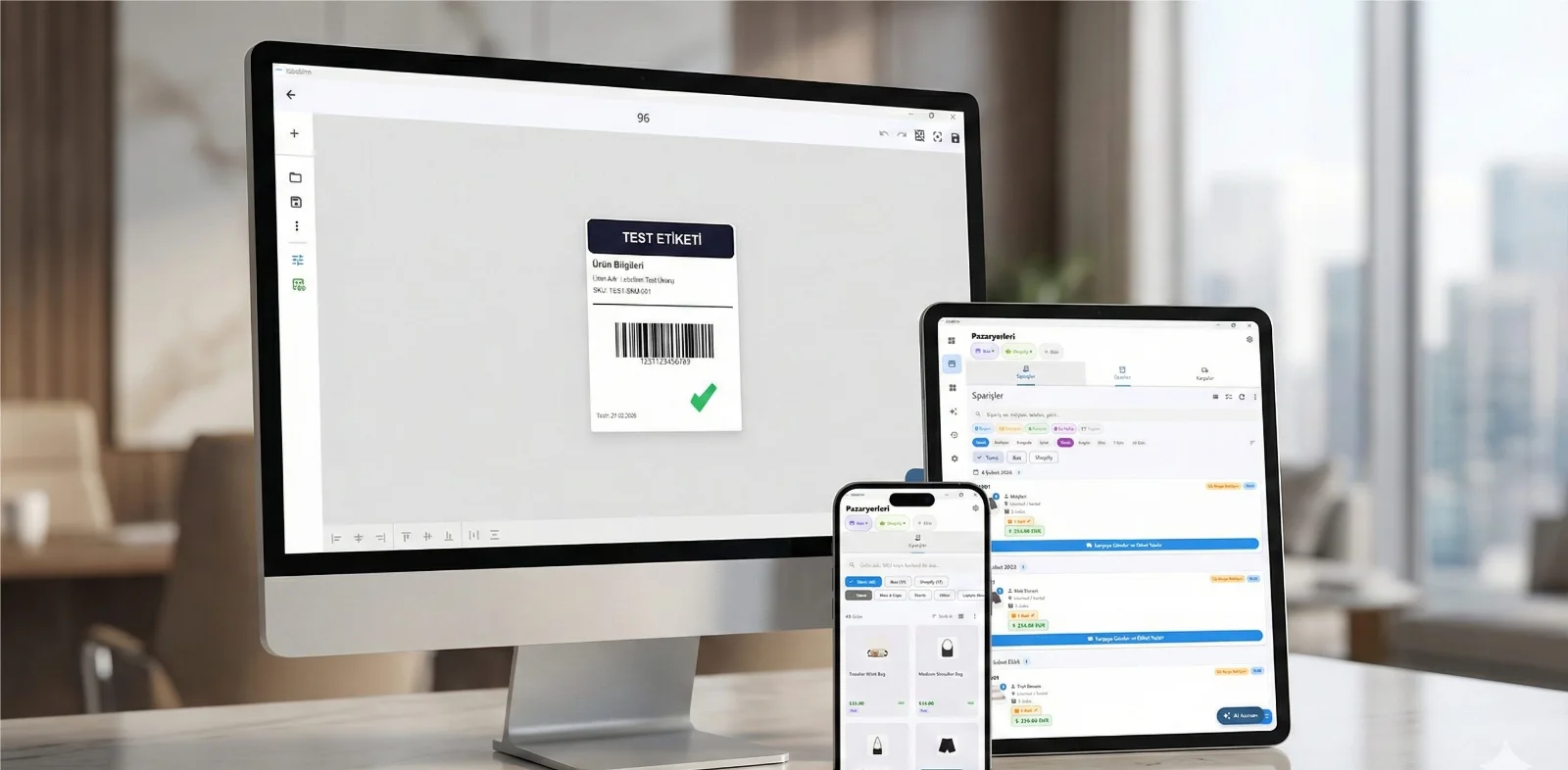
White paper for plant managers, factory IT, and industrial automation engineers evaluating label-printing platforms for production environments where cloud-only architectures are not acceptable.
01
The 30-second version
A modern label-printing platform is a cloud service. That works beautifully — until the WAN drops, the upstream ERP saturates the link, the carrier's BGP flaps for forty seconds, or the warehouse's leased fiber gets backhoed. At that moment, every cloud-only label printing system in the building stops. The line stops. The audit trail develops a hole. The Quality Manager finds out the next morning.
LabelInn ships the same cloud platform every customer uses, plus an Edge Server that runs on a Windows or Linux node inside the factory's LAN. The edge node exposes three interfaces — REST, gRPC, and MQTT — so production systems (ERP, MES, SCADA, robot cells, PLCs) talk to it directly. Print jobs route to the local printer fleet over LAN. Latency drops from cloud's 800–1200 ms to LAN's 30–80 ms. When the WAN is gone, the edge node accepts jobs into an append-only outbox, prints them, and syncs the records back to cloud the moment the WAN returns.
The cloud-side compliance machinery — hash-chained audit, HMAC signatures, per-element rendered-value capture — runs identically against the edge-produced records. From a regulator's perspective, an offline burst and an online burst look the same: a chain of signed events with verifiable continuity.
If your line cannot tolerate a cloud outage, the Edge Server is what you need. Talk to engineering about the network topology that fits your plant. Book a 30-minute architecture review →
02
1. The cloud-only failure mode every factory has lived through
The label-printing software running on most production floors today is one of two things: a desktop application on a Windows PC next to the printer, or a thin client pointing at a cloud SaaS. Both fail in different but predictable ways:
- Desktop app: the operator copies a CSV onto a USB stick, walks it to the line, opens a designer, prints. No integration with the rest of the plant. Audit trail is whatever the application writes locally — usually one row per print. Discovery during a regulator visit: there are six "audit databases", one per workstation, and three of them are corrupt.
- Cloud SaaS: the integration with the rest of the plant is real and live — but it depends on the cloud being reachable. When the WAN drops, the line stops. The vendor's status page says everything is green; the issue is between the building and the vendor's edge. The plant has a forty-minute outage and no leverage.
The Edge Server is the answer to both failure modes. It is the local execution engine, with first-class cloud presence as a feature, not the only operating mode.
03
2. The three-protocol architecture, one node
A factory has three classes of system that need to talk to the label printer:
- The ERP / WMS / order systems — these speak REST, almost universally. They want to
POST /print/jobsand get a job id back. - The PLCs, robot cells, and machine tools — these speak whatever their integrator has standardized on, but they overwhelmingly prefer gRPC or a binary RPC for latency, streaming, and typed schemas.
- The SCADA, MES, and IIoT brokers — these are pub-sub by design. They speak MQTT against an existing broker on the plant network (typically Mosquitto, HiveMQ, or AWS IoT Core).
The LabelInn Edge Server exposes all three on a single node:
- REST — a versioned local API at
/local/v1/*. Print job submission, fleet status, health, scan-to-verify, metrics, audit query, rules evaluation. The integration target for the ERP/WMS world. - gRPC — typed services for print, fleet management, verification, and system control. Server-streaming methods for live printer telemetry and job lifecycle events. The integration target for the industrial automation world; see the gRPC deep dive for the proto surface.
- MQTT — pub-sub topics under a configurable prefix (typically
labelinn/print/*,labelinn/printer/*,labelinn/verify/*,labelinn/cmd/*) against the plant's existing broker. Outgoing events for SCADA dashboards and incoming commands from MES workflows. See the MQTT integration guide for the topic catalog.
Why all three? Because in real plants, all three are already there. We meet the customer's stack where it lives instead of forcing a single integration pattern that wins arguments inside the vendor and loses deals on the floor.

04
3. Offline-first storage with append-only outbox
The edge node holds an append-only outbox on local disk. Every regulated event — print submitted, print completed, print failed, printer state change, verification scan result, audit-trail entry — is written to this outbox before it is acknowledged to the caller. The outbox is fsync-strict: a power loss between the write and the acknowledgement is recoverable from disk on next boot.
A background synchronization service drains the outbox to the cloud whenever connectivity is available. The cloud-side audit chain receives the events in the order they were generated locally; the chain integrity guarantee is preserved across the offline burst. From an auditor's perspective, a forty-minute WAN outage during which the line produced 412 serialized labels appears as a contiguous block of 412 signed audit entries with the synchronization timestamp recorded on each.
This is the engineering that makes "offline-tolerant printing" not just a marketing line but a property a Quality Manager can defend to a regulator.

05
4. Peer-to-peer mesh discovery (mDNS)
Multi-node deployments — a plant with three production lines, each with its own edge node, plus a fourth edge node in the QA office — discover each other on the LAN via mDNS without configuration. New nodes announce themselves; existing nodes maintain a registry of peers and their currently online printer fleet. The ERP or MES can submit a job by site, by printer role, or by exact printer identity; the receiving edge node routes the job to the healthiest peer that owns the target printer.
A failed node drops out of the registry on the next heartbeat. Jobs in flight roll over to a peer if the policy allows. No IP configuration on the ERP side, no static routing on the integrator side. The factory IT team installs the edge node software on a new line's host and the new node joins the mesh.
06
5. Continuity with the cloud audit chain
Every regulated event written at the edge carries the same per-tenant HMAC signature that cloud-produced events carry. The signing key is derived per-tenant from a master secret held in the cloud-side Hardware Security Module; the derived key is bound to the edge node identity and is rotated when the node is decommissioned. The signature covers exactly the same fields cloud signs, so a verifier (cloud-side or external auditor) sees no distinction between edge-origin and cloud-origin events except for an origin: edge field on the entry itself.
The hash chain at the cloud is keyed per-tenant. Edge events join the chain in their generation order at the moment of sync-back, which means: a Quality team running the daily chain verifier never sees a fork, a gap, or an out-of-order ingress. The chain is a single continuous sequence of signed entries that survives WAN bursts transparently.
07
6. Performance — what the LAN buys you
| Path | Typical latency | Worst-case observed |
|---|---|---|
| Cloud-only print path (operator click → printer engaged) | 800–1200 ms | 5+ seconds when WAN saturated |
| Edge LAN print path (same) | 30–80 ms | ~150 ms under simultaneous load on the edge node |
| Edge print during WAN outage | Same as edge LAN (no cloud round-trip needed) | — |
| Audit/sync-back lag after WAN restoration | Seconds for the first batch, drained in real-time after | — |
The 10× latency reduction is the difference between a robot cell pausing for a label and a robot cell never noticing the print was issued. For high-throughput packaging lines running at one to three units per second per line, this matters.
08
7. Where this leaves legacy on-prem label software
Legacy on-prem label software is local-only by definition; it has no cloud audit, no mesh discovery, no offline-tolerant cloud-sync because there is no cloud. Audit data lives on the workstation. The workstation gets re-imaged for an unrelated reason. The audit data does not come back.
Legacy cloud-only label SaaS solves the audit problem but loses the local-execution property. The line stops when the WAN drops. The customer pays a SaaS bill plus a four-hour-outage cost on the day the carrier's BGP flaps.
The Edge Server combines the offline tolerance of on-prem software with the audit continuity of cloud SaaS. There is no choice to make between the two; you get both, on the same software, with one operations team.
09
8. What is intentionally not in this paper
- Specific implementation files, ports, library versions. NDA material.
- The exact hardware sizing recommendation for the edge node (depends on printer count, throughput, and concurrent integrations).
- Pricing. Talk to enterprise@labelinn.com.
- The specific TLS / mTLS posture for inter-node and cloud-bound traffic (configurable per tenant; reviewed during the architecture call).
KEEP GOING
Related Reading
NEXT STEP / LABELINN
Stop Letting the WAN Stop the Line
Talk to engineering. We'll walk your network diagram with you, explain the failure modes the edge node closes, and answer your factory IT team's questions directly. · Sub-100 ms LAN print latency · Append-only offline outbox with cloud sync-back · REST + gRPC + MQTT on one node · mDNS peer mesh, zero IP config on the ERP side