COMPLIANCE / EU / ESPR
EU Digital Product Passport (ESPR): What It Means for Your Labels
The EU digital product passport under ESPR: what it is, which products come first, the 2026 registry and the 2027 battery date, and what it means for your labels.
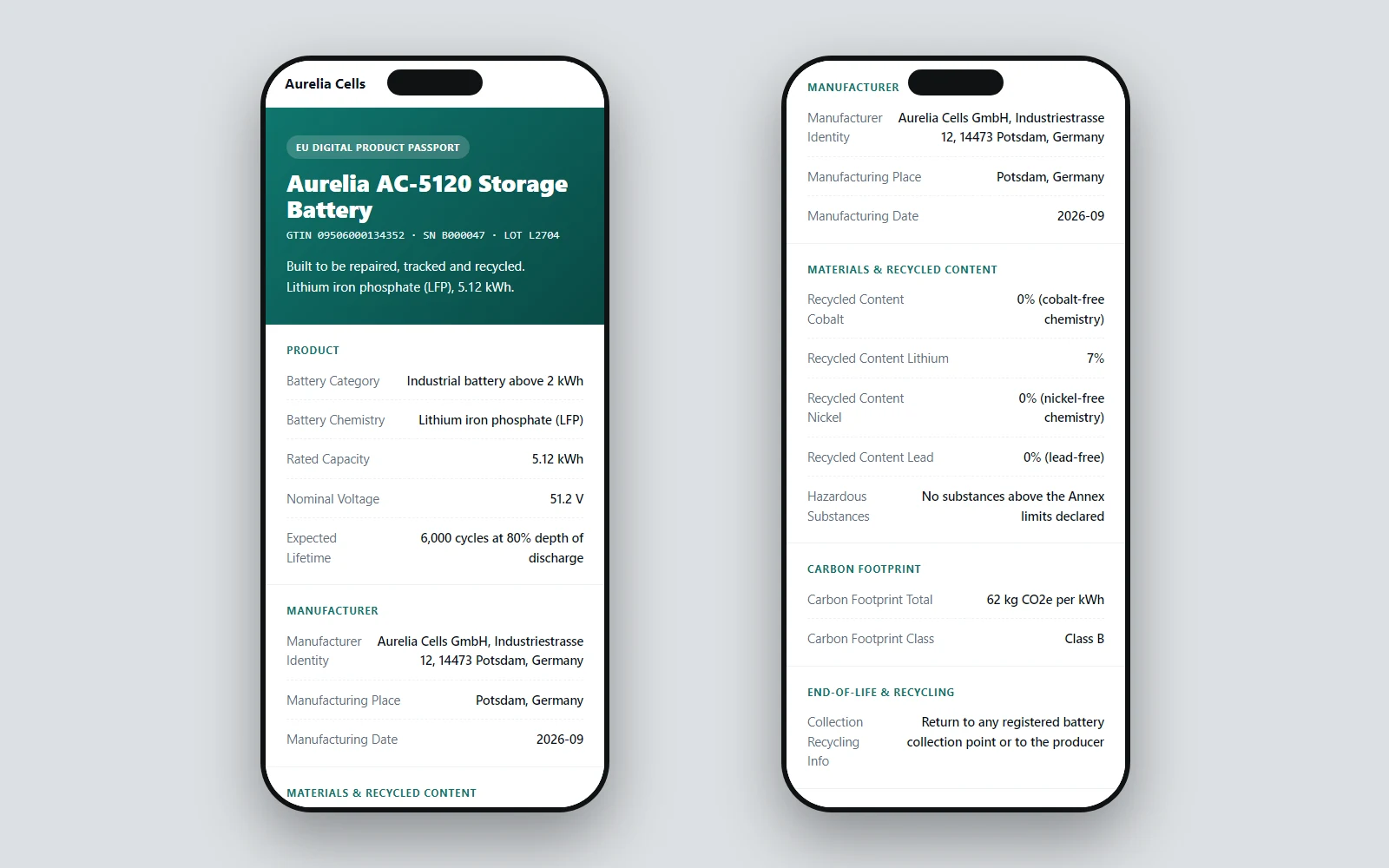
The EU digital product passport is a digital record of a product, reached by scanning a data carrier on it. It comes from the Ecodesign for Sustainable Products Regulation, Regulation (EU) 2024/1781, which sets a framework and lets the Commission set the details product group by group. Batteries are first.
This page keeps to what the Commission itself says, with the sources linked, and marks what is still open. It is a reading aid for label work, not legal advice.
FROM REGULATION TO LABEL
What the rules turn into on your line.
A code on the product, a page behind it and a registry entry. The first two are label work.
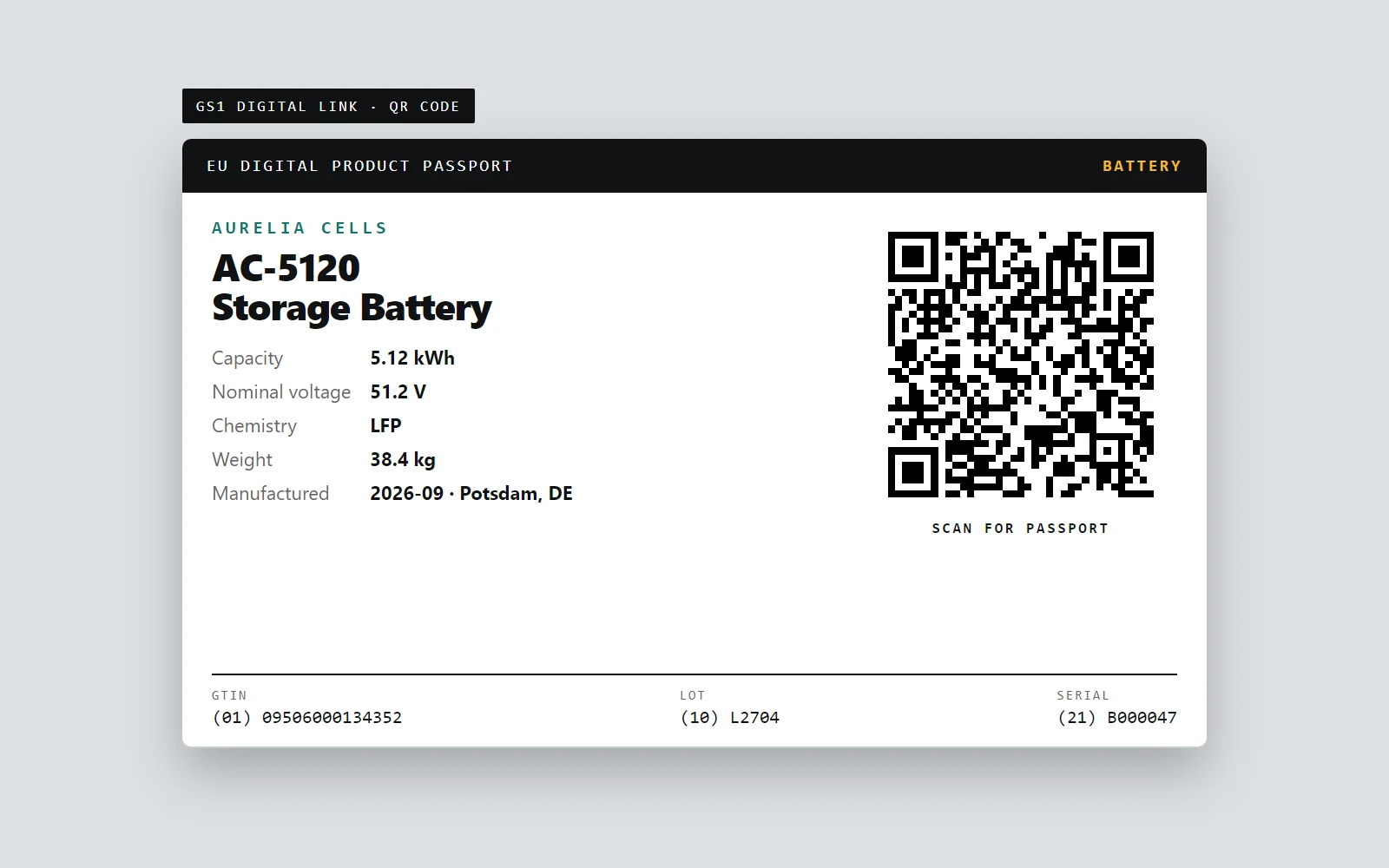
What the regulation asks to be physically on the product: a code that opens the passport.
Fields for the public. Restricted fields stay off this page.
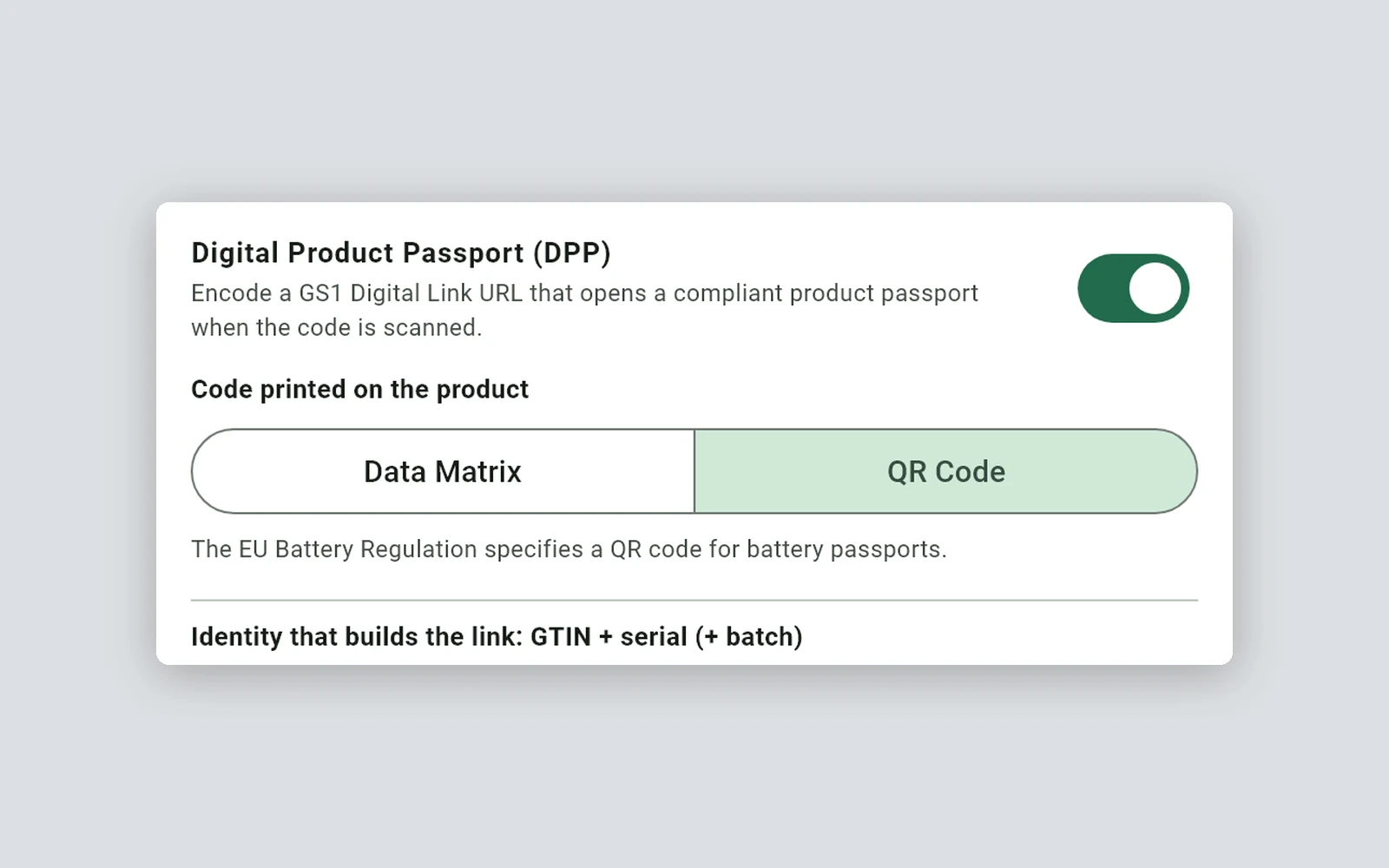
Where the passport meets the label on your line.
01 / ESPR
The dates that are fixed
| Date | What | Source |
|---|---|---|
| 20 July 2026 | The Digital Product Passport registry became operational, with a test environment | the Commission's registry announcement |
| 18 February 2027 | The battery passport becomes mandatory for the relevant battery categories placed on the EU market | Commission page on the battery passport |
At the time of writing (October 2026), the registry user guide notes that registering battery passports is not yet possible, because the data model for the battery product group is still to be defined. Check the registry for the current state.
Other product groups follow as the Commission adopts rules for each. The registry is announced as supporting textiles, steel and aluminium, tyres, furniture, ICT and energy-related products, and groups under other legislation such as construction products, toys and detergents. Dates for those are not set in the pages above, so check the Commission before relying on one.
02 / BATTERIES
Who is responsible
For batteries, the Commission puts the obligation to create and maintain the passport on the economic operator that places the finished battery on the market, not on the suppliers of components. The full passport data stays with that operator or a service provider it designates. The registry keeps only a record: the unique product identifier, a URL that resolves to the passport, and optional model and batch identifiers. In return it gives the operator a unique registration identifier, which customs can check for imports.
Registering is open only to a verified economic operator. Enrolling means creating an EU Login, filling in an organisation profile and having the organisation's legal representative sign a Commission-sealed declaration with a qualified electronic signature or seal. That step cannot be handed to a software vendor.
03 / REGISTRY
What it means for your labels
| Requirement | Label work? | In LabelInn |
|---|---|---|
| A data carrier on the product (a QR code for batteries) | Yes | The passport switch in the barcode panel, QR code or Data Matrix as the carrier |
| A unique identifier per product, level set by the rules | Yes | GTIN, batch and an automatic per-item serial, built into one Digital Link |
| Passport data online, tiered by who may see it | Partly | Hosted page and JSON-LD, with public, restricted and private fields |
| Registering the passport in the EU registry | Not by us | The operator's task, after its legal representative enrols the organisation. LabelInn provides the identifier and hosts the passport it points to |
| The content: carbon footprint, due diligence, recycled content | No | Yours. LabelInn flags which required fields are missing |
04 / LABELS
What a passport looks like
The images are a sample battery from a fictional maker. The label carries the link; the page shows the public tier; software gets the same data as JSON-LD from the same address. Fields that the battery rules place above the public tier (critical raw materials, state of health, due diligence, dismantling safety) are not on the public page.
05 / ESPR
What to do now
- Check your product group on European Commission: Digital Product Passport and note what the delegated act says about the carrier.
- Get your GTINs in order. They come from GS1.
- Start collecting the data. It is the slow part. See how to create a digital product passport.
- Print a test label and scan it on your own hardware. See the DPP label guide.
06 / BATTERIES
Where it stops
- Not legal advice or certification. LabelInn is not a certified solution.
- No registry enrolment or submission. LabelInn hosts the passport page and data and provides the identifier. The operator enrols and registers it.
- Moving details. Implementing standards and delegated acts are still being finalised. Check the Commission pages above for the current state.
ANY PRINTER
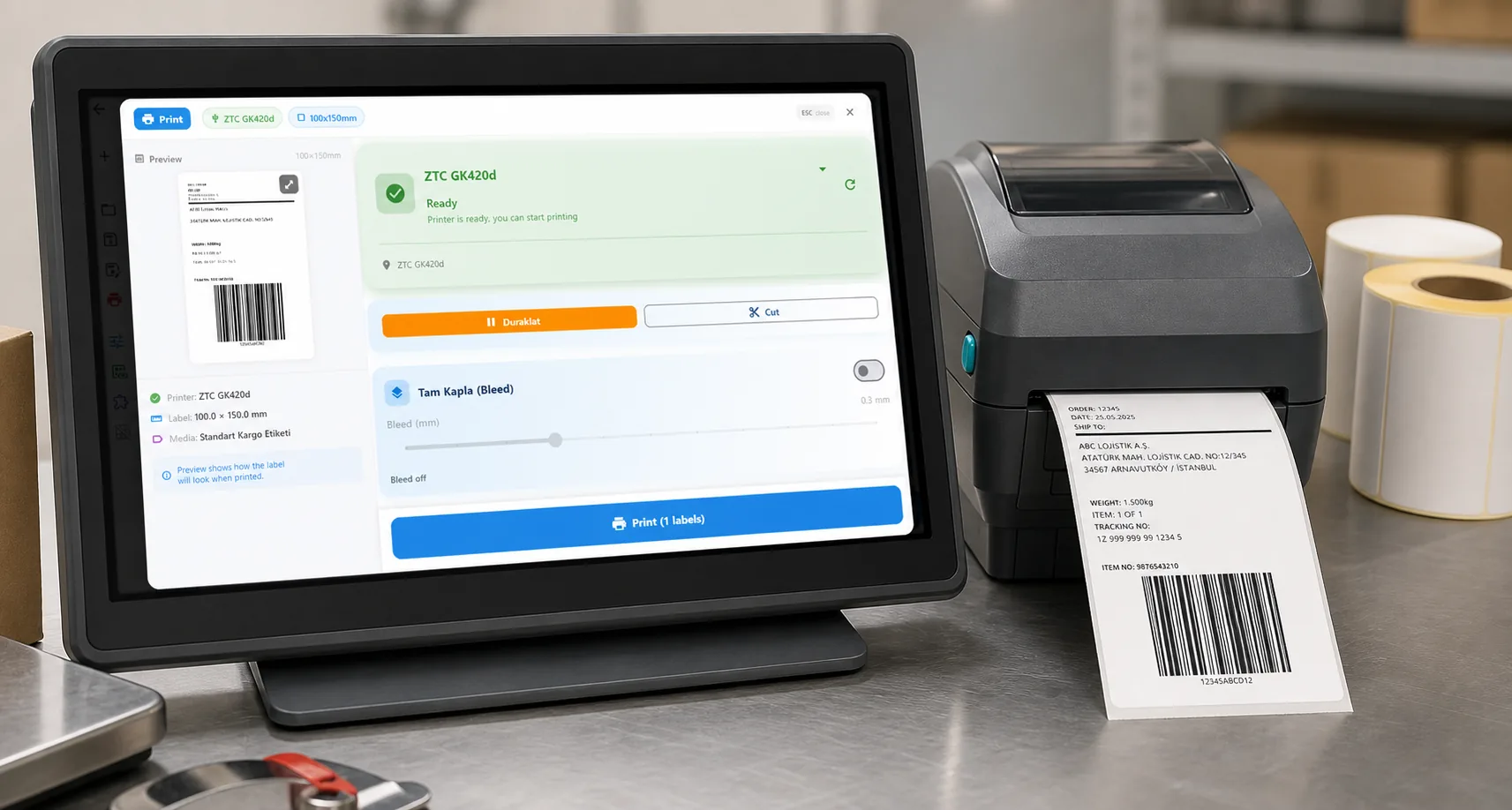
Design it, bind your data, print on the printer you already own.
Zebra, TSC, Toshiba, Epson and more — over USB, network or Bluetooth, with no driver to install.
PRICING
Start free. Pay when it earns its keep.
QUESTIONS / FAQ
Frequently asked questions
What is the EU digital product passport?
A digital record of a product, reachable by scanning a data carrier on it, introduced by the Ecodesign for Sustainable Products Regulation (EU) 2024/1781. The Commission sets the details for each product group.
When does the battery passport apply?
From 18 February 2027, for the relevant battery categories placed on the EU market, according to the European Commission.
Is there an EU registry for passports?
Yes. The Digital Product Passport registry became operational on 20 July 2026. It stores the identifier and the address of each passport, not the passport data. Verified economic operators register each passport there; at the time of writing the registry's user guide says battery registration is not yet possible.
Which products come after batteries?
The Commission names textiles, steel and aluminium, tyres, furniture, ICT and energy-related products among the groups the registry supports, with rules to follow in delegated acts. Check the Commission for the dates of your group.
Who has to create the passport?
For batteries, the economic operator that places the finished battery on the market, not the suppliers of components.
Does LabelInn make me compliant?
No. It prints the data carrier, hosts the passport page and flags missing required fields. Compliance, the content and the registry entry remain your responsibility.
KEEP GOING
Related
BUILDING A PASSPORT?
Tell us your product and your deadline.
Each product group has its own rules, and the first steps differ for a battery maker and a clothing brand. Send us your product group, how many items you label a year and where your product data lives today. A person replies within 24 hours with what LabelInn covers today and what it does not.